
Nutrition, economic growth and environmental sustainability are often treated as separate development priorities, but Nestlé Nigeria is making the case that lasting progress depends on connecting all three.
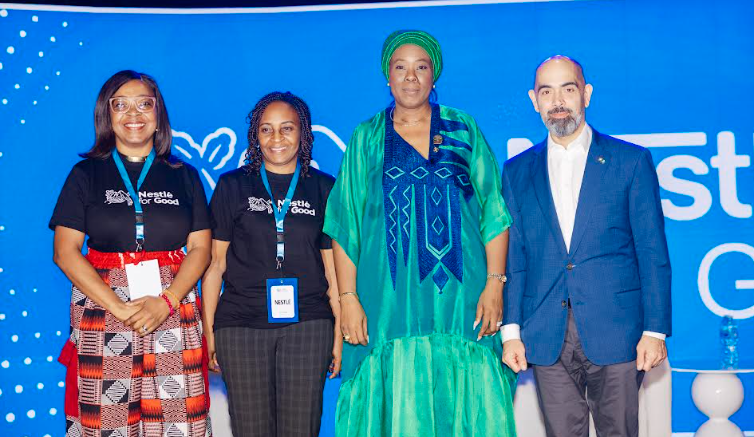
At the Nestlé for Good Summit 2026 in Lagos, the company brought together government officials, healthcare professionals, development partners, academics, industry leaders and civil society organisations to explore how collaboration can deliver better nutrition, stronger livelihoods and more resilient communities.
The summit placed Nestlé Nigeria’s approach to creating shared value at the centre of discussions on the country’s nutrition and development challenges, highlighting the connections between the food people consume, the livelihoods they depend on and the environment that sustains food production.
Among those in attendance were Lagos State Commissioner for Commerce, Cooperatives, Trade and Investment, Mrs Folashade Bada Ambrose-Medebem, and Commissioner for Health, Professor Akin Abayomi.
Through the gathering, Nestlé sought to encourage practical collaboration among stakeholders whose decisions and activities influence public health, food systems, economic opportunity and environmental sustainability.
Speaking at the event, Nestlé Nigeria Plc Managing Director and Chief Executive Officer, Wassim Elhusseini, said the company’s commitment to improving quality of life was closely connected to how food is sourced, produced and delivered.
“At Nestlé, we are guided by a simple but powerful purpose: to unlock the power of food to enhance quality of life for everyone, today and for generations to come,” he said.
Elhusseini explained that delivering good food consistently and at scale required strong systems throughout the value chain, from responsible sourcing and manufacturing to distribution, livelihood development, skills building and environmental sustainability.
He described Nestlé for Good as a more connected expression of the company’s work across three areas: nutrition, thriving communities and the planet.
The message was clear: the impact of food businesses extends beyond the products on supermarket shelves. Their operations and partnerships also intersect with the wellbeing of communities, the development of local livelihoods and the sustainability of the resources on which food systems depend.
Nestlé Links Nutrition to Human and Economic Development
For Nestlé Nigeria, the discussion around nutrition also raises questions about public health, productivity and the country’s long-term economic prospects.
In her keynote address, Ambrose-Medebem commended the company for convening stakeholders around issues she described as critical to public wellbeing and economic development.
“The conversations we are having today are not only about food. They are about human capital, productivity, public health, economic growth, and ultimately, the future of our society,” she said.
Her remarks reinforced the need for cooperation between government, businesses, development institutions and communities to improve nutrition outcomes on a meaningful scale.
The summit provided a platform for participants to discuss practical approaches to nutrition across different stages of life, stronger local food systems and more resilient communities.
These priorities are interconnected. Nutrition influences health and wellbeing, while livelihoods and economic opportunities affect people’s ability to access food. Environmental sustainability, meanwhile, remains important to the long-term resilience of the systems responsible for producing and distributing it.
By bringing these issues into one conversation, Nestlé Nigeria positioned collaboration as an important part of addressing challenges that cannot be resolved by a single organisation or sector.
Beyond Individual Initiatives
Victoria Uwadoka, Corporate Communications, Public Affairs and Sustainability Lead at Nestlé Nigeria, said the summit was intended to demonstrate how the company’s activities connect across its operations and community investments.
“Nestlé for Good is not simply about showcasing individual initiatives. It is about demonstrating how our products, sourcing, partnerships, and community investments connect in practical ways to support healthier lives and more resilient communities,” she said.
The platform brought together discussions about Nestlé’s products and operations with initiatives focused on communities and sustainability, offering stakeholders a broader view of the company’s approach.
Patricia Ekaba, Head of Corporate Communications, Public Affairs and Sustainability for Central and West Africa, also emphasised the importance of looking beyond short-term interventions.
“Sustainable progress requires looking beyond short-term interventions. Business growth and social progress are interconnected, and lasting impact comes from creating value for both the business and the communities it serves,” she said.
Her remarks highlighted a central issue in corporate sustainability: the relationship between business performance and the long-term wellbeing of the communities in which companies operate.
For Nestlé Nigeria, the summit provided an opportunity to explain how it seeks to connect these interests through its value chain, partnerships and community-focused initiatives.
From Women’s Empowerment to Sustainable Food Systems
A key feature of the summit was an impact showcase presenting stories of beneficiaries connected to Nestlé’s initiatives in women’s empowerment, youth capability development, dairy development and environmental sustainability.
The showcase allowed participants to engage with examples of interventions intended to support livelihoods, strengthen communities and encourage more sustainable practices.
It also illustrated the range of areas through which Nestlé’s work intersects with the broader development agenda, from building individual capabilities to supporting activities linked to food production and environmental responsibility.
Participants had the opportunity to explore how the company’s products and initiatives relate to nutrition, livelihoods and sustainability at different stages of the food system.
Nestlé Nigeria used the platform to underline the importance of viewing these efforts as connected components of a broader approach rather than isolated activities.
However, the wider significance of such initiatives ultimately rests on the results they deliver. Improved nutrition, stronger livelihoods and more sustainable practices require sustained implementation, effective partnerships and outcomes that communities can experience and measure.
The Challenge of Turning Collaboration Into Impact
The Nestlé for Good Summit comes as Nigeria continues to contend with interconnected nutrition, public health and food system challenges.
Addressing them requires more than dialogue. It calls for cooperation among public institutions, businesses, healthcare professionals, development organisations and communities, alongside practical interventions that can be sustained and assessed over time.
By convening these stakeholders, Nestlé Nigeria sought to deepen conversations around how their respective roles can contribute to shared development priorities.
The summit also reinforced the company’s position that responsible business practices and social progress should be considered together, particularly in sectors such as food, where commercial operations are closely linked to people’s daily lives.
For Nestlé, connecting nutrition, economic opportunity and environmental sustainability is central to its Nestlé for Good platform.
The longer-term measure of success will be the extent to which the partnerships and ideas discussed at the summit translate into tangible improvements in nutrition, livelihoods and environmental outcomes.
Ultimately, the gathering placed a fundamental question before businesses, policymakers and development partners: how can the systems that provide food also contribute to healthier people, stronger communities and a more sustainable future?
Nestlé Nigeria’s answer centres on collaboration, shared value and an approach that recognises nutrition, economic growth and sustainability as mutually connected priorities.